Patek Nautilus vs. Audemars Piguet Royal Oak: Which Luxury Sports Watch Won?
Two watches mentioned in the same breath. Very different price stories.
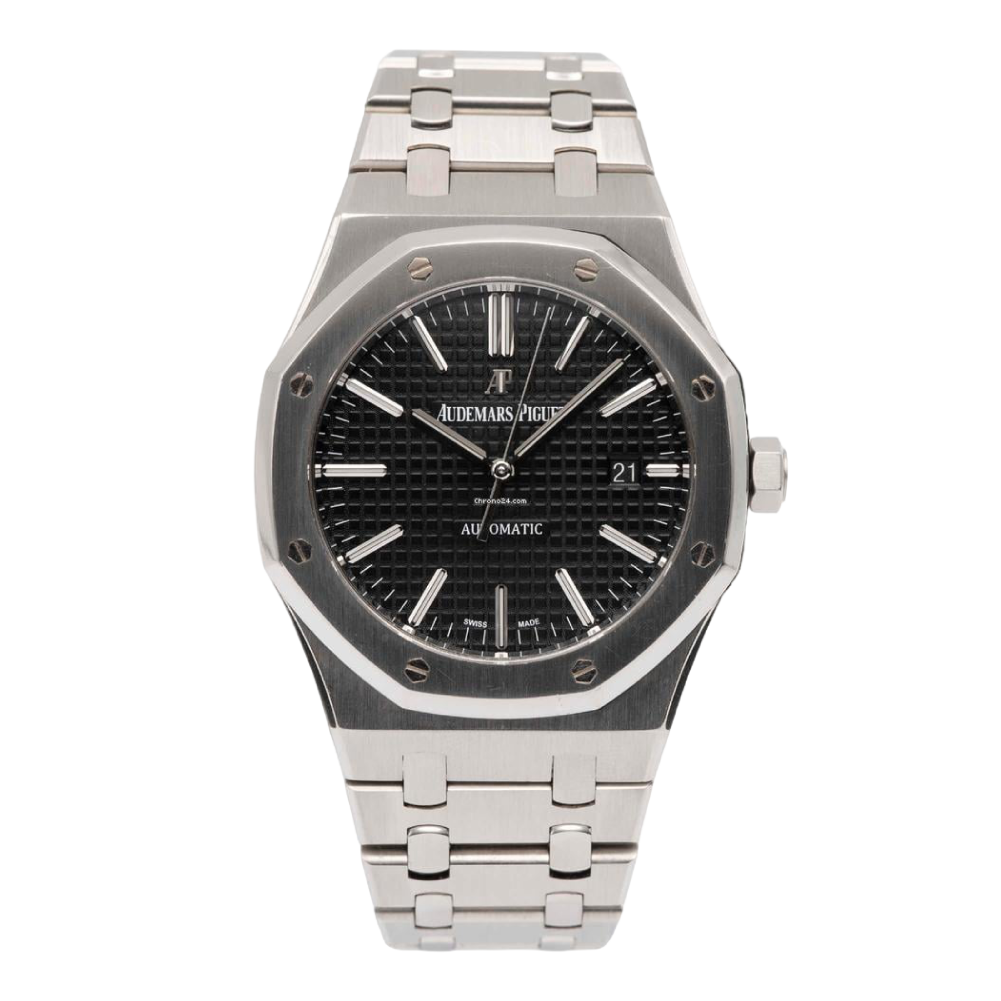
The Patek Philippe Nautilus 5711 and the Audemars Piguet Royal Oak 15400ST are often grouped together because the category invites it: steel luxury sports watches, integrated bracelets, Gérald Genta-adjacent mythology, and years of demand that spilled far beyond traditional collectors.
But putting them on the same chart reveals a useful truth: icons can share a genre without sharing the same market story.
What the chart shows
Nautilus
AP Royal Oak
Patek Nautilus vs. Audemars Piguet Royal Oak: Which Luxury Sports Watch Won?
The Splurge Index chart compares the Nautilus and Royal Oak from 2016 to 2026.
Both represent the broader surge in high-end sports-watch demand. Both benefited from the luxury-watch boom. Both saw secondary-market enthusiasm become part of their public identity.
But the Nautilus 5711 follows a more explosive path, especially as discontinuation became part of its narrative. The Royal Oak 15400ST also moves strongly, but its curve is less singularly tied to one decisive event.
That difference matters. Some resale stories are powered by category demand. Others are powered by a specific model becoming folklore.
The Nautilus: discontinuation turned heat into legend
Nautilus
AP Royal Oak
Patek Philippe Nautilus · 2016
~$29k→~$130k
AP Royal Oak · 2016
~$15k→~$38k
Patek Philippe’s decision to end the steel Nautilus 5711 line changed the emotional temperature around the watch. The model was already scarce and sought-after. Discontinuation added finality.
Collectors tend to react strongly when a product they already want becomes narratively closed. It is no longer just difficult to get. It becomes the version that ended.
That dynamic did not create Nautilus demand from nothing. It intensified a demand structure that already existed. The chart captures that shift from hot model to market mythology.
The Royal Oak: an icon with broader continuity
The Royal Oak 15400ST has a different kind of strength. Its design is one of the most recognizable in modern watchmaking, and Audemars Piguet’s Royal Oak family remains culturally central to the high-end sports-watch conversation.
But the 15400ST does not benefit from the exact same “last-chance” narrative as the Nautilus 5711. Its price story is more connected to:
the Royal Oak’s enduring design power,
broader luxury-watch enthusiasm,
and the willingness of buyers to pay for recognizable modern icons.
It is still a serious curve. It is simply a different kind of drama.
What the comparison says about luxury watches
This chart is valuable because it shows two distinct engines of secondary-market pricing:
1. Model-specific narrative
The Nautilus 5711 became a collector event. Its market was driven not only by Patek prestige, but by the sense that a specific chapter had closed.
2. Category-leading design power
The Royal Oak 15400ST benefits from being part of one of the most durable visual languages in watches. Its appeal is not dependent on one moment, even if the market cycle amplified it.
Both can create value. They just do it differently.
Why “which one won?” is slightly unfair
A fair comparison can still ask an imperfect question.
“Which watch won?” suggests a clean contest. The actual market is more nuanced. The result depends on:
selected start and end dates,
specific reference,
condition,
completeness,
and the point in the luxury-watch cycle when the watch was bought.
The chart can show price paths. It cannot reduce taste, collectability, and personal relevance to one ranking.
The takeaway
The Nautilus 5711 and Royal Oak 15400ST belong in the same conversation. They do not belong in the same simplified story.
The Nautilus shows how discontinuation can supercharge an already famous object. The Royal Oak shows how enduring design authority can remain powerful without needing the exact same narrative twist.
One may win the selected timeframe. Both explain why luxury sports watches became one of the defining collectible markets of the last decade.